
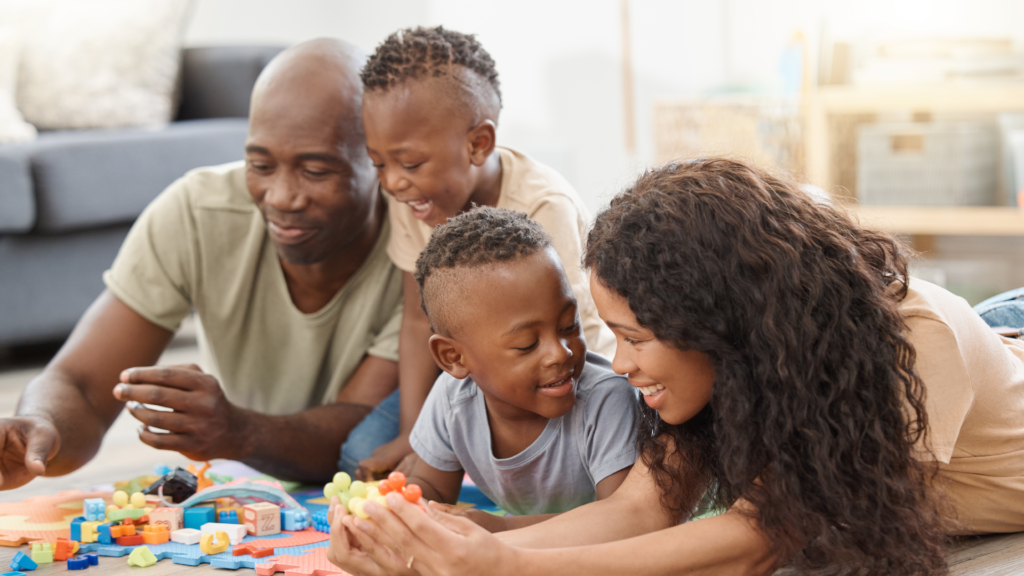
What is a Love Language?
A love language is the way a person most naturally gives and receives love. While everyone needs affection and connection, not everyone feels it in the same way. Some children light up when they hear encouraging words. Others feel most secure when they spend one-on-one time with you. Some feel deeply cared for when you help them, hug them, or surprise them with something thoughtful.
The concept of love languages reminds parents that love is not just about what they give. It is about how it is received. When they learn their child’s preferred love language, they can communicate more confidently, which deepens connection and promotes emotional security.
Teaching children about love languages also builds emotional intelligence. It helps them recognize their needs, express them respectfully, and understand that others may feel loved in different ways. That awareness is a life skill that will serve them in friendships, classrooms, and future relationships.
Understanding love languages can be a powerful parenting tool because it helps you respond to your child’s emotional needs with greater clarity and intention.
Parents often express love consistently, yet a child may still say, “You don’t spend time with me,” or “You never listen.” In many cases, it is not a lack of love. There is a mismatch between how love is expressed and how it is received. When you identify your child’s primary love language, you reduce guesswork and increase connection.
Love languages also help with:
- Strengthening Attachment
When children feel loved in ways that resonate with them, they feel secure. Secure children are more confident, cooperative, and emotionally regulated. - Improving Behavior
Many behavior challenges stem from unmet emotional needs. A child who needs quality time may act out to get attention. A child who needs words of affirmation may withdraw if they feel unnoticed. Proactively meeting needs often reduces attention-seeking behaviors. - Enhancing Communication
Teaching children to say, “Can we spend time together?” or “Can you help me with this?” builds emotional vocabulary and self-advocacy skills. - Increasing Intentional Parenting
Instead of reacting to behaviors, you begin responding to needs. Parenting becomes less about correction and more about connection. - Modeling Healthy Relationships
When children see love expressed thoughtfully and respectfully, they learn how to give and receive love in their friendships and future relationships.
In parenting, love is not just something we feel. We demonstrate this in ways our children can clearly recognize and receive. When that alignment happens, the home environment becomes calmer, warmer, and more emotionally safe.
Children's Books About Love
Here’s a curated selection of children’s books about love, caring, self-love, affection, and relationships that feature Black children or Black families as central characters. These books are perfect for building empathy, connection, and emotional vocabulary in young readers while also expanding representation.
Picture Books Focused on Love, Family & Self-Worth
- Hair Love by Matthew A. Cherry — A tender story about a young Black girl and her dad bonding over styling her natural hair, celebrating family love and confidence.
- I Am Enough by Grace Byers — A lyrical affirmation of self-worth and kindness, encouraging young readers to love themselves and others.
- I Am Every Good Thing by Derrick Barnes — Poetic affirmation for Black boys about their worth, talents, and goodness — love expressed through identity and affirmation.
Books Highlighting Caring Relationships & Emotional Connection
- One Love by Cedella Marley — A gentle story that celebrates love in all its forms, rooted in community and togetherness.
- Yo! Yes? by Chris Raschka — Though brief, this Caldecott-honored picture book shows a friendship blooming between two boys through simple exchanges of words — a lesson in connection and acceptance.
Books With Themes of Emotional Growth & Identity
While not all are strictly about “love languages,” these books include emotional awareness, caring, or appreciation that support children’s understanding of feelings and relationships:
- Sulwe by Lupita Nyong’o — A powerful story about self-acceptance and love of one’s own identity.
- The Year We Learned to Fly by Jacqueline Woodson — A story of siblings using imagination and encouragement to lift each other up.
“What’s My Love Language Today?” Chart
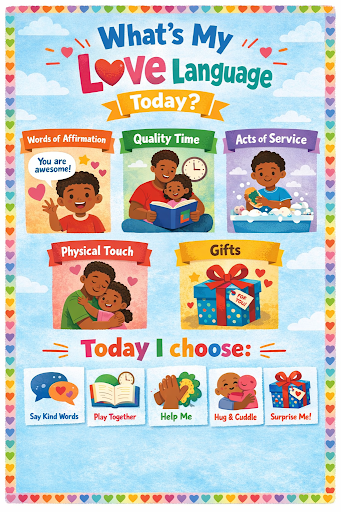
This visual chart helps your child identify how they would most like to receive love and connection each day. Instead of guessing what they need, you can invite them to choose it. That simple act builds emotional awareness, communication skills, and confidence.
Each section represents one of the five love languages in child-friendly words and pictures:
- Words of Affirmation – “Say Kind Words”
- Quality Time – “Play Together”
- Acts of Service – “Help Me”
- Physical Touch – “Hug & Cuddle”
- Gifts – “Surprise Me”
How to Use the “What’s my Love Language Today” Chart Daily:
- Morning Check-In (1 minute)
Ask: “What’s your love language today?”
Let your child point to or name the one they need most. - After-School Reset
If your child seems off, revisit the chart and ask again. Sometimes the answer changes after a long day. - Build Emotional Vocabulary
Encourage your child to say: “I need some quality time.”
“Can you say something encouraging to me?”
“Can you help me with this?” - Make It Interactive
Add a small clothespin, magnet, or dry-erase star so your child can mark their choice for the day.
Over time, using tools like the chart and activities helps your child understand their needs and express them clearly — empowering you as a parent and strengthening your relationships at home, at school, and beyond.
Connection becomes intentional. And intentional love? That’s transformative.
Simple games & family rituals
Love Language Scavenger Hunt involves finding items or moments that represent each love language, like a note for words or a spoon for acts of service. These activities make learning about love languages engaging and help children connect actions with feelings in everyday life.
Affirmation Bingo — create bingo cards with affirmations and actions; mark during the week.
Weekly Gratitude & Compliment Circle — Sunday: 5-minute family rounds; each person gives one thank-you and one compliment.